
Law of Arbitration in India - Introduction and Key Components
 Lawyer's Arc
Dec 27
Don't miss the trending news

Force majeure, originating from French civil law, literally translates to "greater force." It encompasses events, including acts of nature like hurricanes or tornadoes, as well as human-induced incidents such as armed conflicts. In essence, force majeure signifies occurrences beyond the control of contract parties.

Section 2(h) of the Indian Contract Act, 1872 defines an agreement that is enforceable by law[1]. When the offer is accepted and the promise is made for acceptance, it forms the agreement and then after the payment of consideration a legal contract that binds the party for performance of what is written in the contract is made, it is contract.

There are several forms of contracts, and each one has certain terms and conditions that are meant to meet the requirements of the parties involved. Even after accounting for the differences, certain similarities are still found. A contract's execution, character, legality, and creation process may all be classified.
One of the main components of India's legal system is the jurisdiction of its High Courts, which represents a fundamental aspect of justice and legal governance. High Courts are essential intermediate courts between the lower courts and the Supreme Court. They have a great deal of power and responsibility to interpret laws, provide justice, and protect citizens' fundamental rights.

Giving individuals their rights and preserving the unstable elements that could cause issuesand jeopardize national security are the responsibilities of the government and the judiciary ofthe nation. The rights described above are referred to as the Fundamental Rights,...
A nation's Constitution serves as the foundational legal code, guiding the creation and application of all other laws. Some have referred to it as a "superior or supreme law," noting that it has "perhaps greater efficiency and authority," "higher sanctity," and greater permanence than regular laws.
Indian constitution is a monumental document which declares India as a sovereign state emphasizing on socialist secular and democratic principles. Our Indian constitution is an umbrella of rights that gives its citizens assurance safeguarding these rights and liberties and removing the biases.
On December 9, 1946, the Constituent Assembly convened for the first time in New Delhi at the Constitution Hall, now known as the Central Hall of Parliament House. The Chamber was beautifully adorned for the occasion, featuring bright lamps suspended from the ceilings and brackets on the walls. The esteemed members, filled with joy and excitement, occupied semi-circular rows facing the Presidentia
In the Indian Constitution, Article 13 and Article 368 play a big role. Article 13 is like a protector of our basic rights, making sure laws don't go against what the Constitution promises. It lets the courts review laws to ensure they follow the Constitution. Understanding the word 'law' in Article 13 is crucial because it sets the rules for what laws can and cannot do.
The term Constitution is derived from the Latin word ‘Constitute’ which means ‘to establish’. The constitution is the essential record of a state or the incomparable law of the state, it is the establishment and wellspring of the legitimate power hidden in the presence of the state.
As India's first citizen and head of state, the President serves as both. "Article 52" of the Indian Constitution states that there will be a president of India. India's President is elected, removed, and has certain requirements listed in Chapter I (The Executive) of Part V of the Constitution (The Union).
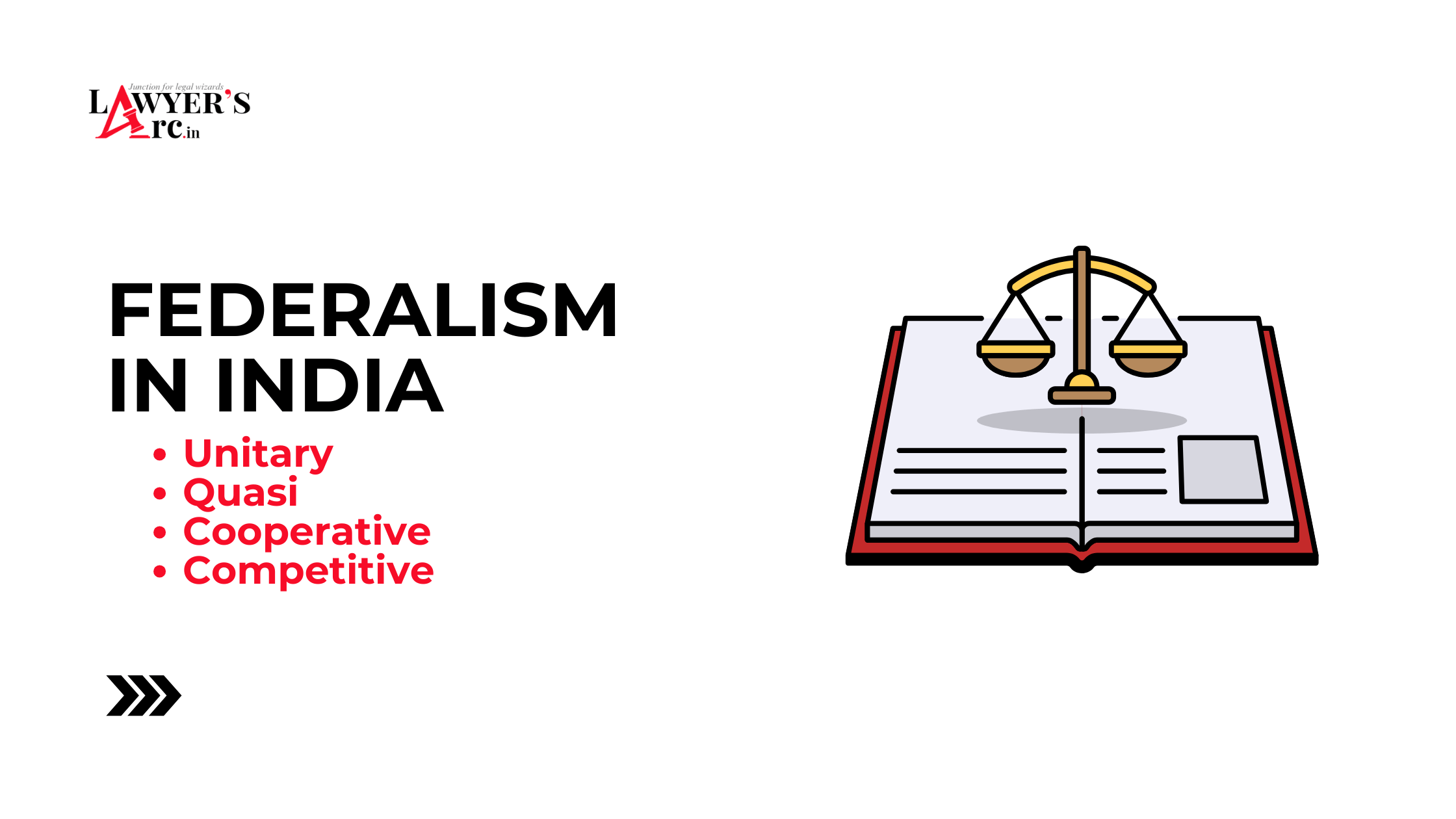
Indian federalism is a distinctive system of governance, blending features of both a federation and a union. Rooted in the post-independence era, it evolved from a unitary structure under British rule. The Constitution delineates the distribution of powers between the union and state governments, employing the Union List, State List, and Concurrent List to categorize legislative authority.

India is governed by the grundnorm which is Indian constitution.According to the Indian constitution India is a Sovereign,Socialist ,Secular,Democratic,Republic with a parliamentary form of government and the nature of the Indian government is both Federal and Unitary that is why it is called quasi federal government.Federal government means “Dual governments”.
The legislature is the entity responsible for establishing laws in the state. It has the authority to enact legislation as well as govern the country. According to Article 168 of the Indian Constitution, a state may have both a unicameral (Legislative Assembly) and a bicameral legislature. Every state must have a legislature, which includes the governor.
Directive Principles of State Policy are a set of guidelines or principles enshrined in Part IV (Articles 36 to 51) of the Constitution of India. DPSP are ideals which are meant to be kept in mind by the state when it formulates policies and enacts laws.

The Right to Freedom of Religion, encapsulated within the provisions of Articles 25 to 28 of the Indian Constitution, stands as a foundational pillar within India's democratic ethos. Its significance extends far beyond legal statutes; it embodies the collective commitment of the Indian nation towards fostering a society that reveres secularism,..

In the context of Indian law, Public Interest Litigation (PIL) refers to legal actions initiated in a court of law not by the affected party but either by the court itself or by another private individual. The court's jurisdiction can be exercised without the direct involvement of the person whose rights have been violated.
The preamble of the Indian Constitution states that Indian democratic governments are “Of the people, For the people, and by the people”. Our constitution makers envisioned a nation where its citizens' rights are paramount. Part III of the constitution brings this objective to realization.
A state cannot govern itself on an ad-hoc basis without there being some norms to regulate it’s basic institution. Governmental organs must draw their power and functions from a predictable body of norms and rules. The purpose of having a constitution is to have a framework of government which is likely to endure through vicissitudes of a person.
The preamble of the Indian Constitution states that Indian democratic governments are “Of the people, For the people, and by the people”. Our constitution makers envisioned a nation where its citizens' rights are given utmost importance. Part III of the constitution brings this objective to realization.
 Lawyer's Arc
 Lawyer's Arc
 Lawyer's Arc
 Lawyer's Arc
 Lawyer's Arc