
Law of Arbitration in India - Introduction and Key Components
 Lawyer's Arc
Dec 27
Indian law has a millennium-long history, influenced by British colonial rule and ancient writings like the Manusmriti. A democratic legal framework was established in 1950 with the enactment of the Indian Constitution, following independence.

Defamation is to make a false statement which harms the reputation of a citizen. In IPC and many other laws the defamation had been explained by the great people and by many principles & exceptions. The main aim of defamation is to protect the citizens' reputation in the society as discussed in Article 21 of the constitution .

Theft is categorized as an offense under the offenses against property in Indian Penal Code. Theft has been covered under sections 378 till 382. Theft is the crime of taking away someone else's movable property without that person's permission. The IPC's Section 378 provides a definition of theft. At the same time, Section 379 of the IPC defines the punishment for committing the offence of theft.

One of the fundamental components of the legal system is the Indian Evidence Act. The most significant law that forms the basis of the disagreement is the law of evidence. A statement or piece of information that supports a statement and enables the court to reach an unbiased verdict is called evidence.

Criminal law is as old as civilization itself. Every society view crime and criminals with enormous disdain, but the study of crimes and the identification of their causes continue to pique the interest of jurisprudential jurists. It is always necessary to come up with strategies and tactics to stop these criminal tendencies among some members of the population in a civilized society.

In criminal law, 'intention' is an important concept. The highest form of the mental element applies to terrible acts. The term 'intention' is not defined in the Indian Penal Code of 1860; nonetheless, Section 34 addresses 'shared intention'.

Right to Bail: Bail is a fundamental right guaranteed under Article 21 of the Indian Constitution.Purpose of Bail: To ensure the accused's appearance in court while preserving their liberty until proven guilty. Bail as Discretion: Granting bail is generally a matter of the court's discretion, considering various factors.

The search and seizure process outlined in the criminal procedure code plays an important role in maintaining the investigative framework. Law enforcement agencies employ two distinct approaches for the execution of certain actions ie. searches with a warrant and searches without a warrant, the legal warrant is issued under specific sections like sections 93,94, 95, and 97.

Plea bargaining, a pivotal legal concept nestled within the folds of the Criminal Procedure Code (CRPC), introduces a nuanced dimension to the labyrinthine landscape of the Indian criminal justice system. In its essence, it represents a strategic compromise, where the accused, prosecution, and the judicial system engage in a delicate legal ballet,..
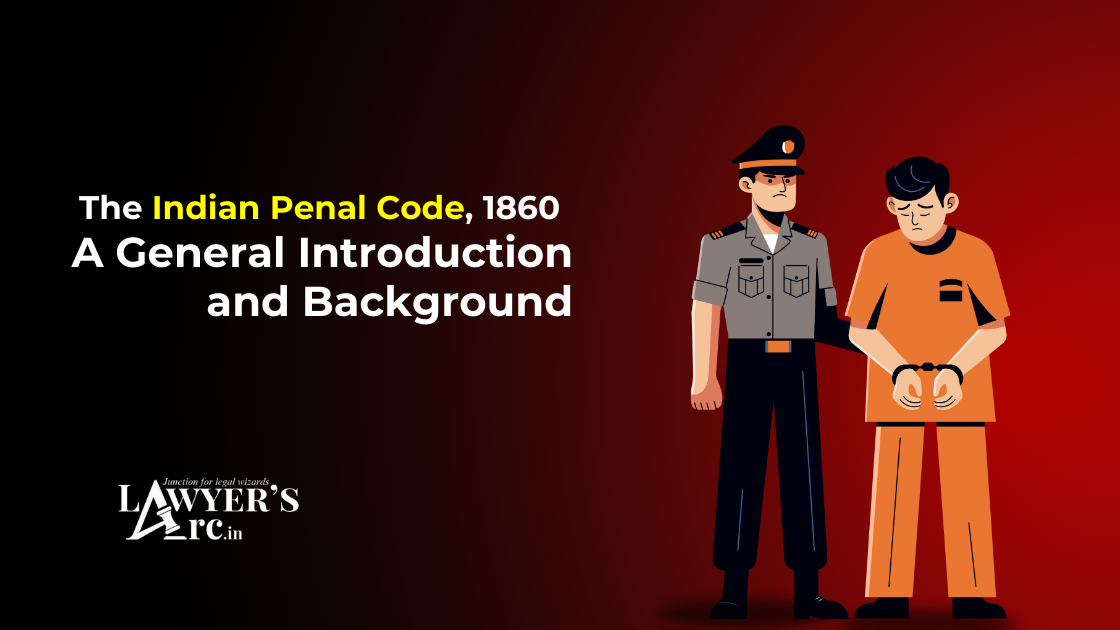
IPC, 1860 was the official criminal code in independent India until it was replaced by Bharatiya Nyaya Sanhita in December 2023. IPC, 1860 was inherited by our forefathers from British India. Its goal was to give an overall reformatory code to the country.

Trespassing is the term for going onto another person's property without their permission and is a common civil violation under the tort law system. As per Black's Law Dictionary, trespassing encompasses any law violation, including assaults on an individual's person or property. In the context of torts, it is considered a civil wrong, seeking monetary damages as compensation for harm or loss.

In India, the Constitution grants individuals the freedom of movement across the entire territory, securing personal liberty through Article 19 and Article 21. The Indian Penal Code, specifically Section 399, outlines the concept of wrongful restraint. To protect an individual's liberty from infringement by individuals or non-state entities,..

Criminal Breach of Trust is the violation of a trust by a person when that person is entrusted with property, either movable or immovable, by another person who by law or by domination was entrusted with the same property. Criminal Breach of Trust is defined in the Section 405 Chapter XVIII of the Indian Penal Code, 1860. And section 406 deals with the punishment for the offence of criminal breach

Originally, the term 'conspiracy' referred to the agreement of two or more people to file a false court complaint against someone or to conduct legal processes in a vexatious or inappropriate manner. In Poulterer's case (1611), the Star Chamber developed the criminal component of conspiracy for the first time, and conspiracy was acknowledged as a substantive offense.

Criminal intimidation is defined under the Indian Penal Code, 1860 (IPC). This is mentioned in section 503 of IPC. In this blog, we will discuss how exactly is criminal intimidation defined in IPC, the essentials of criminal intimidation,n and how they are mentioned in sections – 507, 508, 509, and 510.
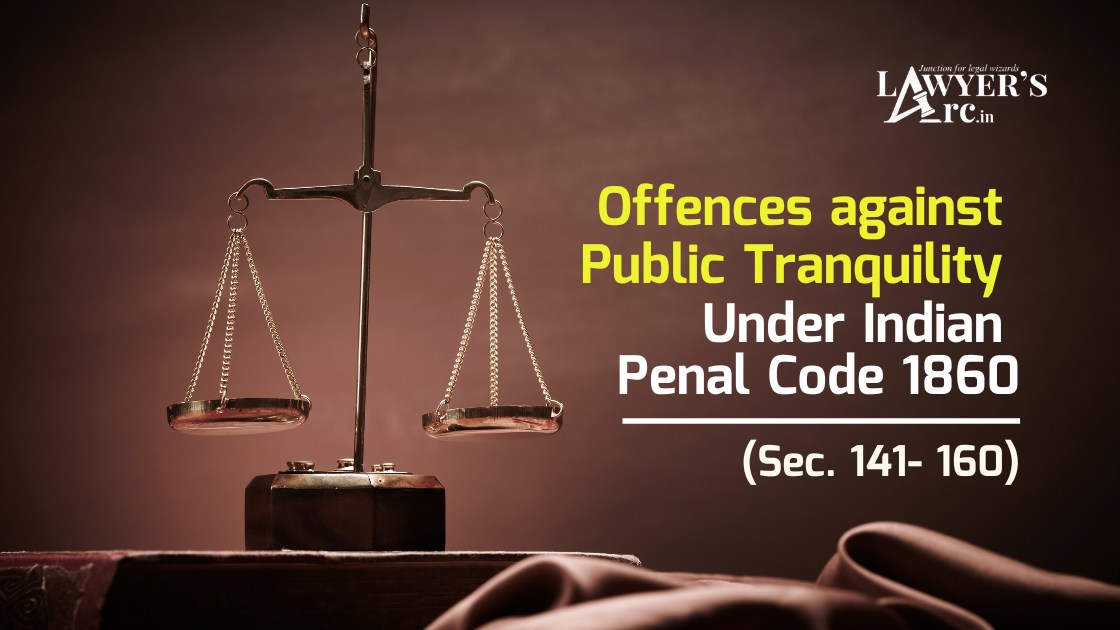
Public tranquility is a cornerstone for the smooth functioning of any society. It refers to the state of peace and order that allows people to go about their daily lives without fear or disruption. To safeguard public tranquility, legal systems often have provisions to address offenses that disturb the peace. In this blog, we will delve into Sections 141-160 of the Indian Penal Code (IPC).

Commutation means reducing or substituting. The Commutation of the sentence means a reduction of the sentence. It means substituting with less severe punishment by changing its nature but not completely absolving the sentence.

Domestic violence is a pervasive problem that affects countless lives around the world. In the context of Indian society, where family ties hold great importance, cases of marital cruelty are unfortunately not uncommon. To deal with this menace, the Indian legal system has adopted various provisions, the main one being Section 498A of the Indian Penal Code.

The main objective of law is to maintain law and order in society and to achieve this goal punishment plays an important role by punishing the wrongdoers and by following the principles of the Indian Criminal justice administration system which is based on certain fundamental maxims and beliefs i.e. a person to be considered innocent until proven guilty but that doesn’t mean that once the alleged,

The Indian Constitution provides several rights to all Indian citizens through several different provisions and articles mentioned in it. Some of these constitute the Fundamental Rights such as the Right to Life and Personal Liberty mentioned under Article 21[1] of the Constitution which allow a person the right to life and a life with personal liberty.
 Lawyer's Arc
 Lawyer's Arc
 Lawyer's Arc
 Lawyer's Arc
 Lawyer's Arc