
Law of Arbitration in India - Introduction and Key Components
 Lawyer's Arc
Dec 27
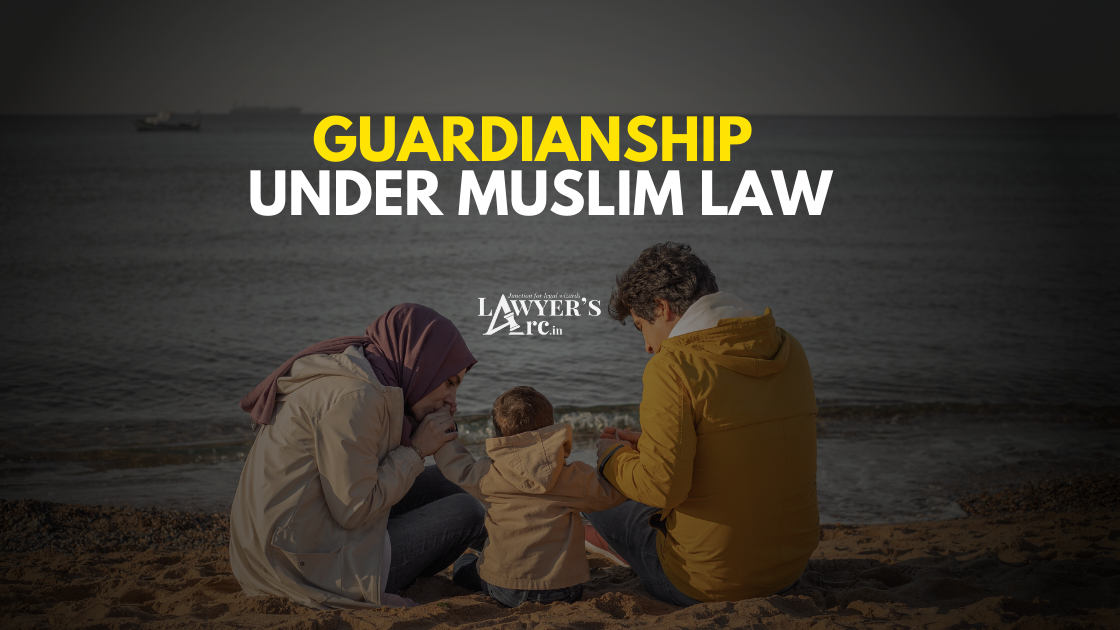
Guardianship under Muslim law in India is a complex legal system that is deeply woven into the fabric of Islamic principles, covering the obligations and rights involved with the protection and care of persons, particularly children and those who are unable to handle their affairs.
Sharia law is a religious law that governs the spiritual, mental, and physical behavior of Muslims. It is the Islamic legal system and is considered to be God's command for Muslims. In India, these in principle were incorporated in the Indian law system under The Muslim Personal Law Application Act, of 1937. Muslims are bound by the Indian Succession Act, of 1925.

Hindu succession act, 1956 talks about the succession and inheritance. This Act establishes a standard and all-encompassing structure that takes inheritance and succession into account. Intestate or unwilled succession is another topic covered by this Act. As a result, this Act incorporates and encompasses all facets of Hindu succession.

Hindu Law, or "Dharma Shastra," traces its origins to ancient texts known as the Dharma Shastras, authored by revered sages like Manu and Yajnavalkya. These texts provided guidelines for ethical conduct, social norms, and legal principles, rooted in the concept of dharma, or righteous duty.

The Calcutta High Court has ruled in a landmark decision that wives who leave their marital residences because of arguments or other compelling circumstances are not entitled to reimbursement for legal fees when their husbands file matrimonial actions against them.

A Hindu Undivided Family (HUF), also known as a Hindu Joint Family, Hindu Undivided Family shall consist of common ancestors along with all its lineal male descendants along with their wives and unmarried daughters. For the existence of the Hindu Joint Family, a common ancestor is essential but for its continuance, a common ancestor is not essential.

The term ‘Maintenance’ in its core can be defined as the ability to sustain a state of being, though maintenance forms a core part of Family Law, particularly in the areas of divorce law, it has nowhere been defined in the various codified religious laws within India and has not even been mentioned under the Special Marriage Act.
 Lawyer's Arc
 Lawyer's Arc
 Lawyer's Arc
 Lawyer's Arc
 Lawyer's Arc