
Law of Arbitration in India - Introduction and Key Components
 Lawyer's Arc
Dec 27

In finance, a share refers to a unit of ownership in a company or corporation. It represents a claim on a portion of the company's assets and earnings. When a company goes public, it often divides its ownership into smaller parts called shares, which are then sold to investors.

A meeting is often a gathering of corporate members; a meeting is critical to a company's overall operation. A meeting must be attended by at least two people. However, one person can do so under rare circumstances. Companies must hold annual meetings to address their corporate concerns, but they can also plan other meetings based on their needs.

The term "promoter" is distinctive to India, attributed to the prevalence of closely held family businesses with rigid equity frameworks. In such enterprises, a small number of individuals, usually one or two, predominantly hold ownership and make pivotal decisions for the company.
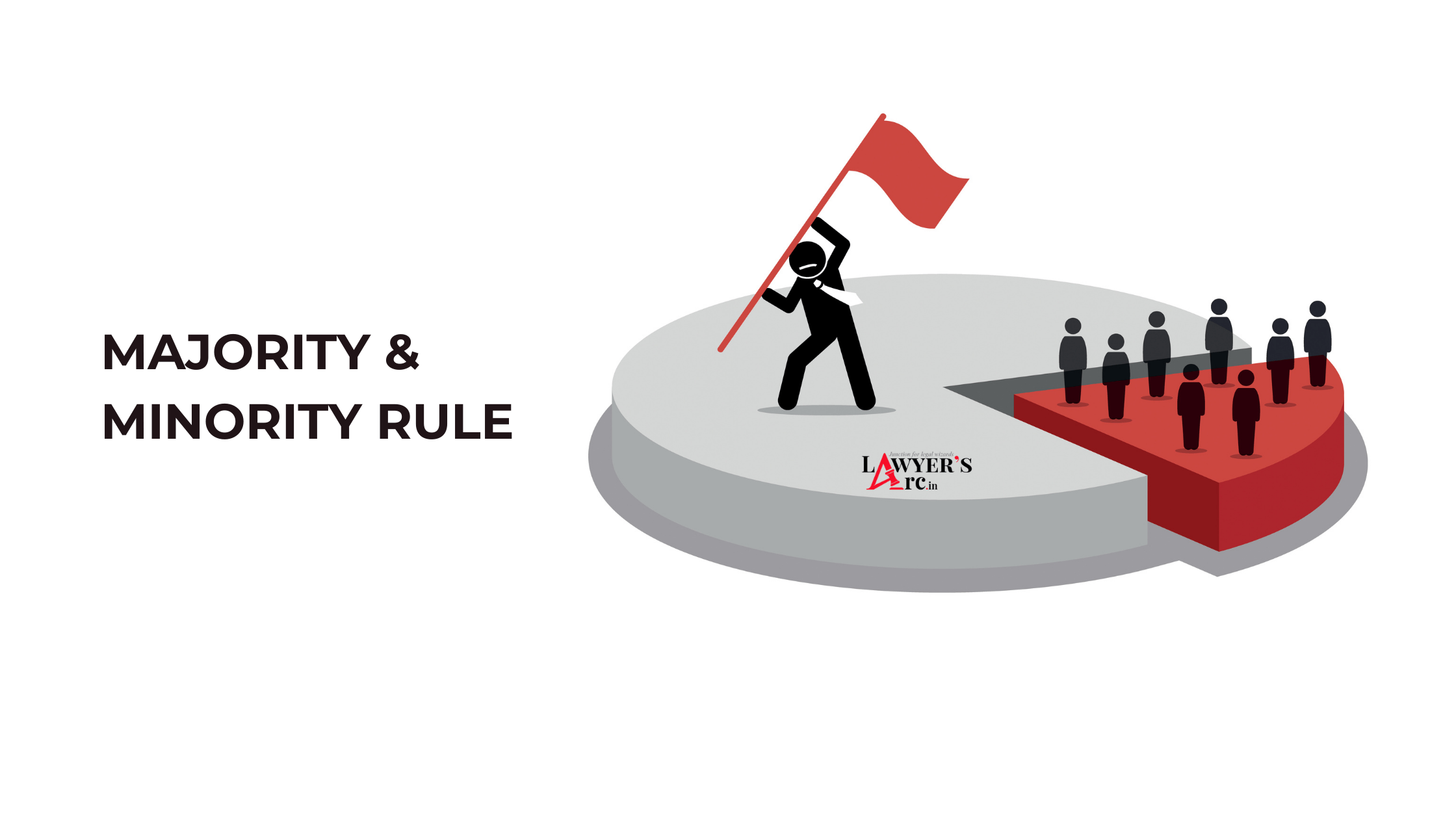
The first act which regulates the corporate entities after the independence was Companies Act, 1956. After that the act was amended several times. But major changes were brought and The Companies Act, 2013 was introduced. The major focus of the act was to regulate the healthy corporate culture and maintain friendly atmosphere among the members or basically shareholders of the company.

From ancient times, the word ‘business’ and ‘business ethics’ often conjures images of ruthlessness, selfishness, insensitivity and to be solely profit-driven. These ruthless business ethics have often closed an eye toward humanity, moral standards and values thereby disregarding employee well-being, environmental sustainability and society’s well-being.

A company has the obligation to make sure that every internal regulation from its Memorandum of Association and Articles of Association is respected when it comes with dealing with third parties[3]. This rule however relieves the third parties from inquiring about if the company they intend to contract with has complied with all the internal regulations.

The Memorandum of Association (MOA) and Articles of Association (AOA) under companies act are the foundation documents upon which a company in India is built. These documents serve distinct yet complementary purposes, defining the company's core aspects and the internal rules that govern its operations. Understanding MOA and AOA is crucial for anyone involved in company formation or governance.
 Lawyer's Arc
 Lawyer's Arc
 Lawyer's Arc
 Lawyer's Arc
 Lawyer's Arc